Couples Therapy: What to Expect in Your First Session


Starting couples therapy can feel intimidating, especially if you have never been to counseling before. You may wonder whether the therapist will take sides, whether you and your partner will have to discuss private issues immediately, or whether you are expected to solve your relationship problems during the first appointment.
The good news is that the first couples therapy session is usually focused on understanding your relationship, identifying concerns, establishing goals, and deciding how therapy can help. It is generally not about determining who is right or wrong.
If you’re searching for couples therapy what to expect first session, here’s a practical guide to what you can expect before, during, and after that first appointment.
What Happens in the First Couples Therapy Session?
The exact format varies depending on the therapist, counseling approach, and your circumstances. However, most first sessions include several common steps:
- Introductions and paperwork
- Discussion of why you’re seeking therapy
- Relationship history
- Each partner’s perspective
- Discussion of communication and conflict
- Initial therapy goals
- Confidentiality and boundaries
- A plan for future sessions
The first appointment is often an intake and assessment, meaning the therapist is gathering information that can help them understand your relationship and determine an appropriate direction for treatment.
1. Introductions and Paperwork
Your therapist will usually begin by explaining how sessions work and confirming basic information.
Depending on the practice, you may complete:
- Intake forms
- Consent forms
- Privacy and confidentiality paperwork
- Contact information
- Payment or insurance information
- Relationship history questionnaires
Your therapist may also explain their counseling approach and what you can expect from future sessions.
This is a good time to ask practical questions. For example, you might ask how long sessions normally last, how often you should meet, and whether the therapist ever meets with partners individually.
2. The Therapist Will Ask Why You’re There
One of the first questions may be something as simple as:
“What brings you both here?”
Each partner may have a different answer.
One person might want to improve communication, while the other may be more concerned about trust, intimacy, finances, parenting, or repeated arguments.
You don’t have to agree on everything before starting therapy.
In fact, different perspectives can give the therapist useful information about the relationship. The therapist’s job is generally to understand both perspectives rather than decide which partner is “the problem.”
3. Expect Questions About Your Relationship History
Your therapist may want to understand how your relationship developed.
Questions could include:
- How long have you been together?
- How did you meet?
- When did you begin noticing problems?
- What was your relationship like when things were going well?
- What major life changes have you experienced together?
- Have you tried counseling before?
- What have you already tried to improve the relationship?
The therapist is building a broader picture rather than focusing only on your most recent disagreement.
Relationship history can help identify patterns that may be contributing to current difficulties.
4. Both Partners Should Have an Opportunity to Speak
A major part of the first couples counseling session is hearing from both people.
A good therapist will generally try to create enough space for each partner to explain their experience without allowing one person to dominate the entire conversation.
You might be asked:
- “What is the biggest problem from your perspective?”
- “What happens when you disagree?”
- “What do you wish your partner understood?”
- “What would you like to change?”
- “What do you appreciate about your partner?”
Don’t worry if your answers are emotional or imperfect. You aren’t giving a presentation or trying to make a legal case.
The purpose is to help the therapist understand what is happening between you.
5. You May Discuss Communication and Conflict Patterns
Your therapist may pay attention not only to what you argue about but also to how the argument happens.
For example, a couple might repeatedly experience a pattern where:
Partner A becomes upset → Partner B withdraws → Partner A pushes harder → Partner B becomes more distant → both become frustrated.
The specific pattern will vary from couple to couple.
Therapists may explore how disagreements begin, how they escalate, how each person responds, and what eventually causes the conflict to stop. Understanding these patterns can become an important part of later therapy.


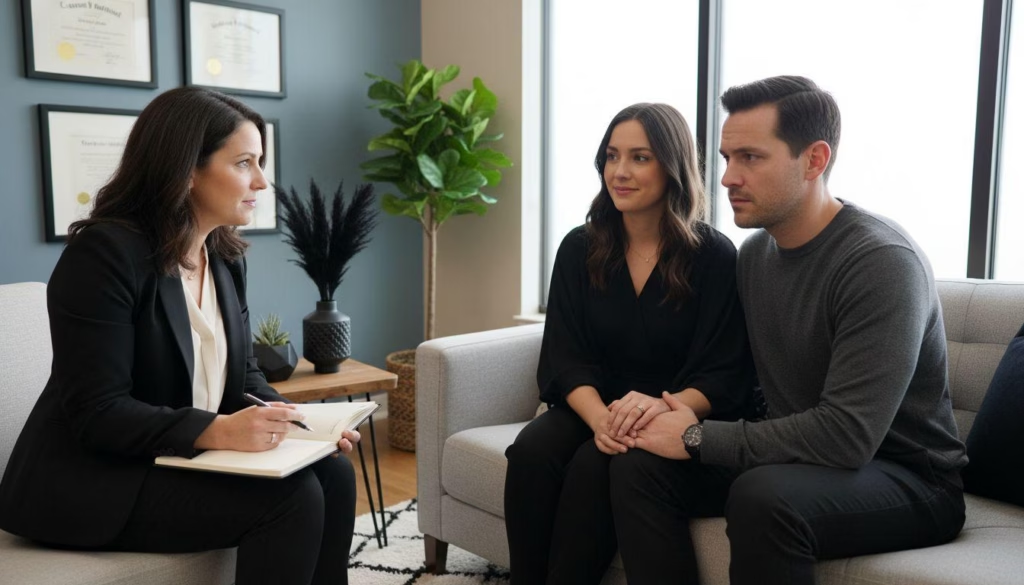
What Questions Will a Couples Therapist Ask?
There is no universal list of questions, but you may hear questions about several areas.
Relationship Questions
- How long have you been together?
- What initially brought you together?
- What are the strongest parts of your relationship?
- When did things begin to change?
Conflict Questions
- What do you usually argue about?
- How often do arguments happen?
- What happens when disagreements become intense?
- How do conflicts usually end?
Communication Questions
- Do you feel heard by your partner?
- Can you discuss difficult topics without fighting?
- What happens when one of you wants to talk and the other doesn’t?
Goals Questions
- What would you like to be different?
- What would make therapy worthwhile?
- What would a healthier relationship look like?
- How would you know that therapy is helping?
These questions help the therapist understand both the immediate problem and the broader relationship dynamics.
Will You Have to Talk About Everything?
No.
You do not necessarily have to reveal every private detail during your first session.
The first appointment is primarily about getting oriented, establishing trust, understanding the major concerns, and determining what needs attention. You can tell your therapist if a particular subject feels too difficult to discuss immediately.
That said, being reasonably honest about the major issues affecting your relationship gives the therapist a better starting point.
You don’t need to prepare a perfect speech. Even saying, “We don’t know exactly where to start, but we’re struggling and want help,” is a perfectly reasonable way to begin.


Will the Therapist Take Sides?
Many people worry that couples counseling will turn into one partner versus the other.
A qualified couples therapist generally aims to create a balanced environment rather than act as a judge deciding who wins an argument. The therapist’s role is to understand the relationship dynamics and help both partners participate constructively.
That doesn’t mean the therapist will automatically agree with everything either person says.
Instead, they may challenge unhelpful communication patterns, ask difficult questions, identify inconsistencies, or encourage each partner to consider their own contribution to the relationship.
What About Confidentiality?
Confidentiality is an important subject to discuss during the first session.
Your therapist should explain their privacy policies and any applicable limits to confidentiality. These rules can vary depending on the therapist, location, professional license, and circumstances.
For couples therapy specifically, it’s also useful to ask how the therapist handles information shared privately by one partner and whether individual sessions are part of their approach.
Ask about the therapist’s confidentiality policy before sharing something you are particularly concerned about.
Will You Argue During the First Session?
Possibly.
Relationship problems don’t magically disappear because you’re sitting in a therapist’s office.
If you and your partner disagree during the appointment, the therapist may use the moment to understand your communication pattern. They may slow the conversation down, give each person an opportunity to speak, or help translate accusations into specific concerns and feelings.
You don’t need to be embarrassed if emotions come up.
However, if there is a risk of violence, intimidation, coercion, or immediate danger, couples therapy may not be the appropriate format without additional safety assessment and specialized support.
Do You Get Homework After the First Session?
Sometimes.
Some therapists provide a small exercise after the first appointment, while others spend the early sessions primarily gathering information and establishing goals.
A homework assignment could involve:
- Practicing active listening
- Having a short daily check-in
- Writing down recurring conflict triggers
- Scheduling intentional time together
- Practicing “I” statements
- Noticing when a familiar argument pattern begins
The specific exercise depends on the therapist’s approach and your relationship needs.
How Should You Prepare for Your First Couples Therapy Session?
You don’t need extensive preparation, but a little thought beforehand can make the appointment more productive.
1. Think About Your Main Concerns
Ask yourself:
“What made us decide to seek help now?”
Try to identify the two or three issues that matter most.
2. Think About What You Want to Change
Instead of only thinking about what your partner does wrong, consider what you would like the relationship to look like.
For example:
- “We want to stop having the same argument.”
- “We want to communicate without shouting.”
- “We want to rebuild trust.”
- “We want to feel close again.”
- “We want to understand whether we can repair the relationship.”
3. Don’t Prepare a Case Against Your Partner
Couples therapy isn’t a courtroom.
Writing down every mistake your partner has made may feel useful beforehand, but approaching therapy as a competition can make productive communication harder.
Try to approach the session with curiosity and honesty instead.
4. Complete Forms Beforehand
If the therapist sends intake forms, completing them before the appointment can leave more time for conversation during the session.
What If One Partner Doesn’t Want Therapy?
This is relatively common.
One partner may be enthusiastic while the other is skeptical, nervous, or only attending because they feel pressured.
You don’t necessarily need identical motivation to begin.
The first session can be an opportunity for both people to explain their concerns and learn how the therapist works.
Instead of saying:
“You need therapy because you’re the problem,”
a more productive approach might be:
“I want us to have some help because I don’t like where our relationship is heading.”
How Do You Know If the Therapist Is a Good Fit?
Finding the right therapist matters.
After your first session, consider:
- Did both partners have an opportunity to speak?
- Did you feel respected?
- Did the therapist listen without unnecessarily taking sides?
- Did they explain their approach clearly?
- Did you understand what happens next?
- Did you feel comfortable asking questions?
- Did the therapist seem knowledgeable about couples work?
One session may not tell you everything. It can take several sessions to determine whether the therapist’s communication style and approach work well for both partners.
What Happens After the First Session?
Toward the end of the appointment, the therapist will usually discuss what happens next.
This may include:
- Identifying the main relationship concerns.
- Establishing initial goals.
- Choosing a therapy approach or treatment direction.
- Scheduling additional sessions.
- Discussing exercises or strategies to try between appointments.
The next sessions generally move beyond basic intake and begin working more directly on the patterns and problems identified during the assessment.
Frequently Asked Questions
How long is the first couples therapy session?
The length varies by therapist and practice. Many therapy appointments are around 45–60 minutes, although some couples therapy practices use longer initial sessions.
Should we talk about our biggest problem in the first session?
Yes, if you feel comfortable. Tell the therapist what you believe is most important. You don’t have to explain every detail immediately.
What if we disagree about why we’re in therapy?
That’s okay. Tell the therapist that you have different perspectives. Understanding those differences can be useful.
Is couples therapy only for married couples?
No. Couples therapy can be used by married or unmarried partners and by couples at different stages of a relationship.
Can couples therapy save a relationship?
Therapy can help couples understand patterns, improve communication, address relationship problems, and make informed decisions about their future. However, no therapist can guarantee that a relationship will continue or that every problem will be resolved.
What should I wear to couples therapy?
Wear whatever makes you comfortable. There is generally no special dress code for therapy.
Final Thoughts: What to Expect in Your First Couples Therapy Session
If you’re nervous about your first couples therapy appointment, remember that you are not expected to fix your relationship in one session.
The first session is usually about creating a foundation: understanding your relationship history, hearing both partners’ concerns, identifying patterns, discussing goals, and explaining how therapy will work.
You don’t need the perfect words, and you don’t need to arrive with all the answers.
Come prepared to be honest, listen to your partner, and remain open to learning something about the relationship—and about yourself.
The goal of the first session isn’t to decide who is right. It’s to start understanding what is happening and determine what can be done about it.
For more
.https://www.psychologytoday.com/us/blog/feeling-our-way/202407/couples-therapy-after-infidelity